

Key Takeaways
- Starting the conversation early opens more doors for your parent’s future.
- Small, repeated changes often signal it’s time to talk, not single moments.
- Lead with curiosity and warmth, not alarm or clinical language.
- Memory care and personal care communities offer connection, structure, and personalized support.
- Include your parent in decisions whenever possible, because their voice matters most.
A Conversation Worth Having
You’ve noticed something. Maybe your mom keeps misplacing things she never used to lose. Maybe your dad seemed confused during a familiar drive home. That quiet, nagging worry you’ve been carrying? It’s time to do something with it.
Talking to an aging parent about memory loss is one of the most loving things you can do, and having that conversation sooner rather than later can make a real difference in the options available to your family.
At Juniper Village at Forest Hills, every conversation about memory and care is met with warmth, curiosity, and a genuine commitment to your family’s next chapter. Explore personalized memory care options that are built around who your parent actually is.
Why This Conversation Matters and Why It’s Hard
This talk is hard because love and fear show up together. You might worry about upsetting your parent, triggering defensiveness, or stepping into a role reversal that feels uncomfortable for everyone. Those feelings are completely normal.
But waiting too long can quietly close doors. When memory changes go unaddressed, the range of support options tends to shrink. Early conversations don’t take anything away—they actually give your family more room to plan, explore, and move at a pace that feels right.
Signs It May Be Time to Have the Talk
Everyday Changes Worth Noticing
Memory loss rarely announces itself all at once. It tends to show up in small, easily dismissed moments—until those moments start adding up. Here are a few worth paying attention to:
- Missed medications, meals, or appointments that didn’t used to be a problem.
- Confusion in familiar places, like getting turned around on a routine walk.
- Pulling away from hobbies, friends, or activities they once loved.
None of these alone means something is definitely wrong. But together, over time, they tell a story worth listening to. The Alzheimer’s Association’s 10 early warning signs can also help you distinguish what’s worth a closer look versus normal age-related forgetfulness.
When Concern Becomes a Conversation
Trust what you’ve been observing. A single off day is just that—an off day. But if you’ve noticed a pattern over weeks or months, your instincts are probably onto something real. Small, repeated changes carry more weight than any single dramatic moment.
You don’t need a diagnosis in hand to start talking. You just need genuine care and a willingness to show up for your parent—even when the conversation feels uncomfortable at first. Learning more about the difference between normal forgetfulness and memory concerns can give you a helpful frame of reference before you sit down together.
How to Start the Conversation with Love and Respect
Set the Right Tone from the Start
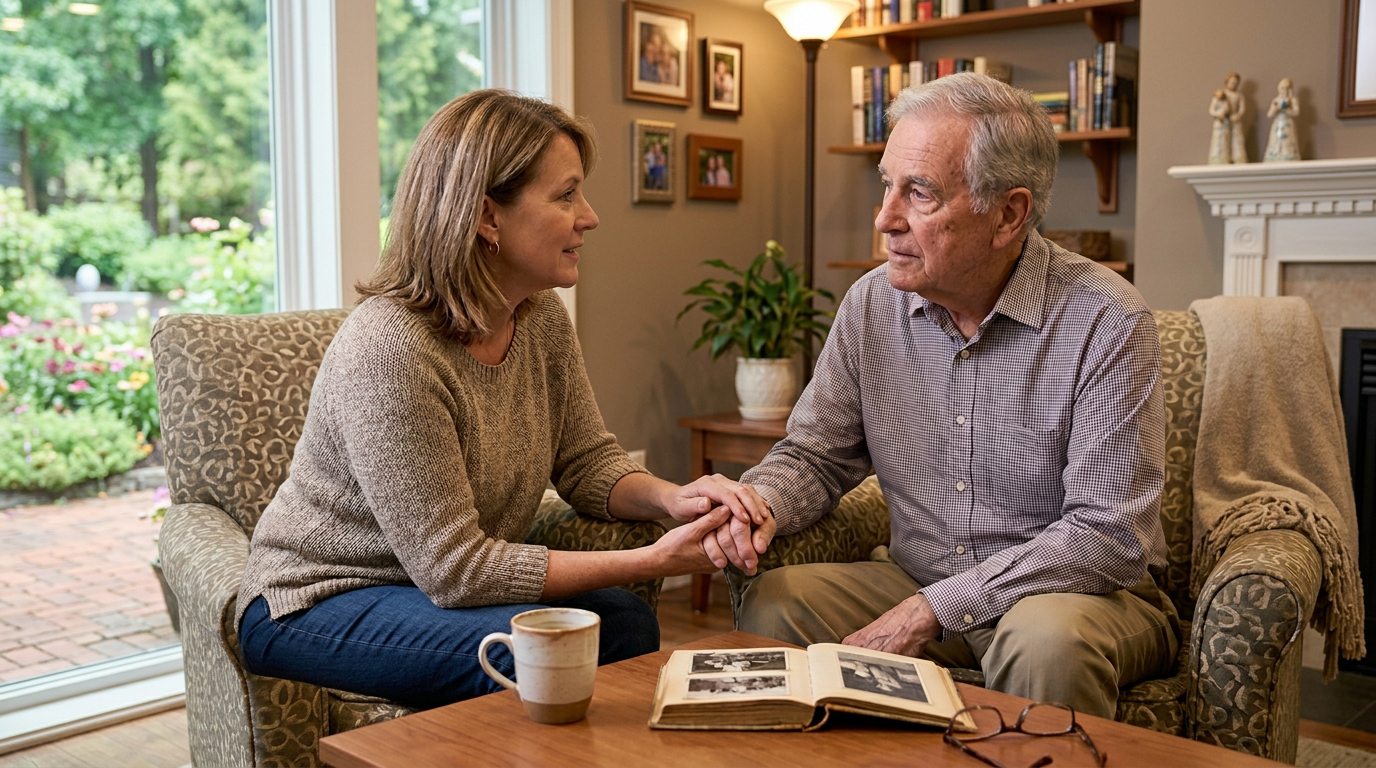
Timing matters. Choose a calm, private moment when neither of you is rushed or stressed—maybe over a cup of coffee at the kitchen table, or during a quiet afternoon walk. Avoid bringing it up in the middle of a busy holiday or after an already emotional day.
Lead with curiosity, not alarm. You’re not there to deliver a verdict. You’re there because you love them and want to understand what they’re experiencing.
Words That Feel Warm, Not Clinical
Focus on how you feel rather than cataloging what they’ve done or forgotten. “I’ve been a little worried lately, and I just wanted to check in” lands very differently than “You’ve been forgetting things a lot.” One opens a door; the other can feel like an accusation.
Ask open questions and really listen. What do they enjoy these days? What feels harder than it used to? Avoid labels like “memory loss” or “cognitive decline” early on. Talk about everyday life instead.
You might be surprised how much your parent already wants to talk about what they’ve been noticing, too. If you’re looking for guidance on navigating this moment as a family, these tips for easing the transition to personal care are a great place to start.

Memory Care and Personal Care Options Worth Knowing
If the conversation leads you toward exploring support, it helps to know what’s out there. Senior living has evolved—these communities are vibrant, social, and designed around who a person actually is, not just what they need help with.
- Memory Care: Thoughtfully designed support for cognitive changes, with programming and team members focused on meaningful daily engagement
- Personal Care: Help with everyday living in a warm, social setting where connections flourish, and routines feel comfortable
- Senior Living Communities: Places built around connection, structure, and the kind of personalized care that adapts as needs change
The goal isn’t to hand over the reins. It’s to find the right support so your parent can keep living a full, joyful life on their own terms.
Moving Forward Together
After the First Conversation
One conversation rarely covers everything, and that’s okay. Think of it as the first of many or like a thread you keep picking up together. What matters most is that your parent feels heard and included in every step, not managed or decided for.
What a Supportive Next Step Can Look Like
When the time feels right, touring a memory care or personal care community together can shift the whole picture. Instead of imagining what it might be like, you get to feel the warmth of a welcoming space firsthand—the hum of activity, the friendly faces, the real sense of home.
At Juniper Village at Forest Hills, personalized well-being plans are built around each person’s story. Reach out to learn more about how the community can support your family’s next chapter.